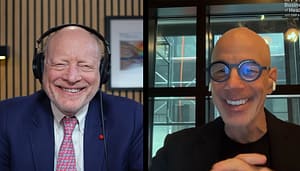
Stephen K. Klasko, MD, MBA, DSc honoris causa
CEO, The Health Assurance Foundation
Advisor, General Catalyst
Board Member, Fairleigh Dickinson University
Dr. Stephen K. Klasko is a healthcare innovator who bridges digital health entrepreneurship with classic medical academia. He has put his creativity first in his roles as university president, dean of two medical schools, CEO of three academic health systems, and one of the few individuals to rename two of the nation’s medical colleges by securing transformational gifts.
An advocate for transformation, he is currently developing ideas from the book he co-authored with Hemant Taneja of General Catalyst, UnHealthcare: A Manifesto for Health Assurance.
Career
For nine years, he was the CEO of Jefferson Health and President of Thomas Jefferson University in Philadelphia, where he transformed the health system from a $1.8 billion regional player into a $10 billion-plus healthcare empire. He pioneered the audacious merger between the health sciences university and a nationally ranked design school, proving that healthcare’s future lies in creativity.
Since leaving Jefferson, he has served as a Catalyst Advisor and as North American Ambassador to the global Future of Health (FOH) network. His board leadership includes NYSE’s Teleflex (as Board Chair of the $7 billion medical device entity) and NASDAQ’s DocGo (as Board Chair), plus a portfolio of cutting edge startups, including Globo, Amplify MD, Hippocratic AI, AIDOC, CraniUs, Paradigm, Oova, and Agentis, that are reimagining healthcare delivery.
A long-time advocate of “healthcare at any address,” he currently is building criteria for success as AI-driven technology integrates with the work of clinicians. His visionary leadership earned him recognition as #2 in Modern Healthcare’s “100 Most Influential People in Healthcare,” tied with industry titans Tim Cook and Jeff Bezos, and #21 in Fast Company’s “100 Most Creative People in Business.” Becker’s Hospital Review has regularly named him among its “100 Great Leaders in Healthcare.”
Authorship
As a prolific author whose works range from serious healthcare manifestos to satirical children’s books, Klasko’s intellectual influence extends far beyond the page. His groundbreaking “UnHealthcare: A Manifesto for Health Assurance” (2021), co-authored with General Catalyst’s Hemant Taneja, not only diagnosed healthcare’s problems but also sparked a movement that directly inspired General Catalyst’s health assurance fund and led to the creation of HATCO (Health Assurance Transformation Company). His upcoming “Hitchhiker’s Guide to the Healthcare Galaxy” (2026) promises to be his most provocative yet, a time-traveling romp through healthcare’s future that shows how the collision of radically different universes can fix America’s fractured system. His recent “Patient No Longer: How YOU Can Lead the Consumer Revolution in Healthcare” (2025) and “Feelin’ Alright: How the Message in the Music Can Make Healthcare Healthier” (2023) uncover profound insights in unexpected places.
His Ambition
Dr. Klasko always dreamed of growing up to beat music DJ, and now moonlights spinning sets from Miami to Las Vegas, a fitting metaphor for someone who has made a career of mixing seemingly incompatible worlds into something entirely new. Klasko approaches everything with the same philosophy that has defined his healthcare revolution: the most interesting solutions emerge when you refuse to accept that different worlds can’t work together.
Dr. Klasko holds a B.S. from Lehigh University, an M.D. from Hahnemann University, an M.B.A from the Wharton School, as well as an honorary doctorate (D.Sc.) from Fairleigh Dickinson University.